

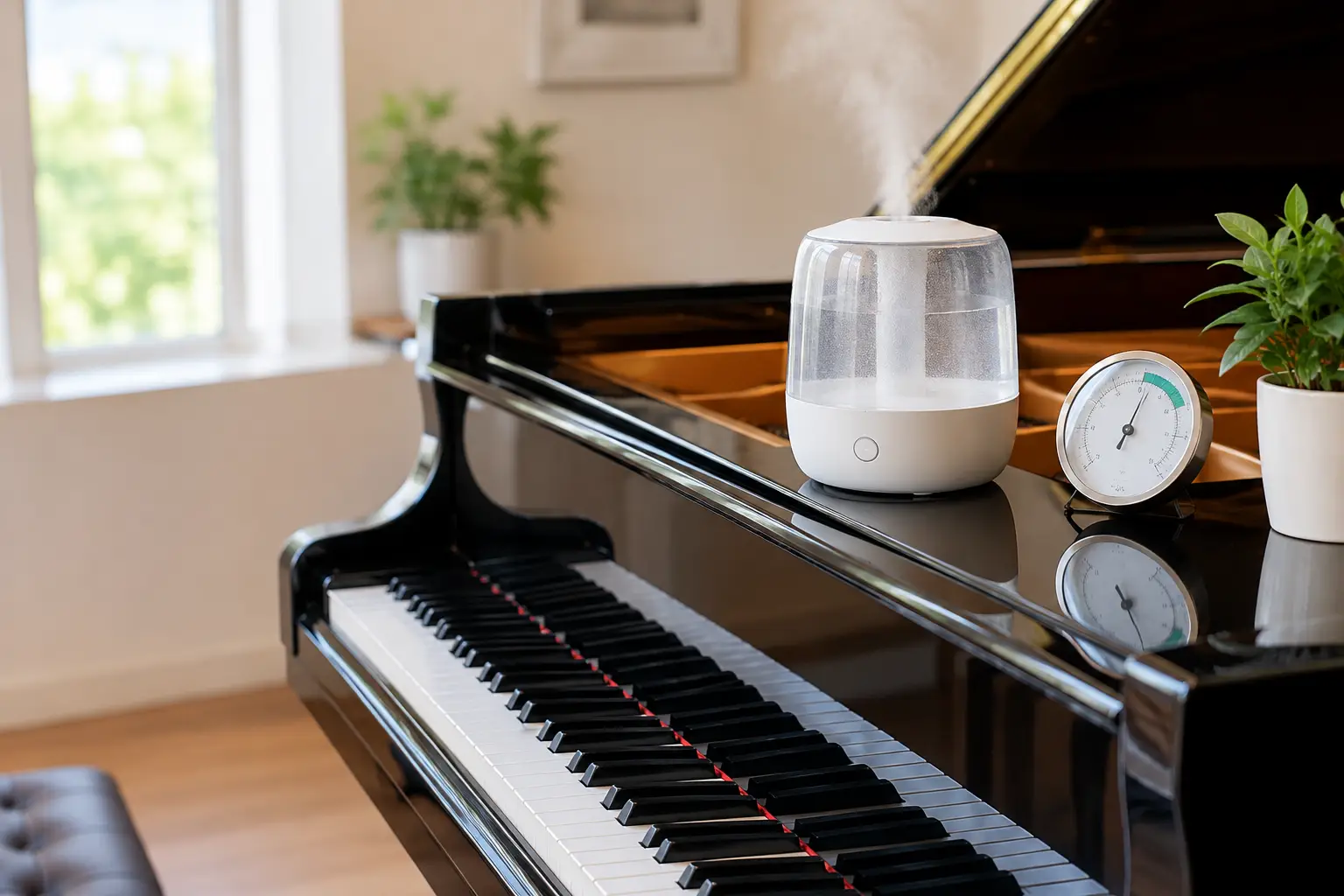
A piano can look perfectly at home in a living room while quietly reacting to every change in the air around it. Piano humidity control at home is one of the most practical ways to protect its tone, tuning stability, action, and long-term value – whether you own a family upright, a Yamaha U3, or a handcrafted grand.
Wood, felt, leather, and metal are all working parts of a piano. When indoor air becomes too dry or too damp, those materials change at different rates. The result may be subtle at first: a few notes that feel less responsive, a tuning that will not hold, or keys that seem unusually tight. With consistent attention to the room environment, most of these issues are preventable.
Why Humidity Affects a Piano So Much
The soundboard is the piano’s acoustic heart. It is a large, thin piece of carefully shaped spruce designed to move and amplify the vibration of the strings. In humid conditions, the soundboard absorbs moisture and expands slightly. This increases string tension and often causes the piano to go sharp. When the air is dry, it contracts, reducing tension and pulling the piano flat.
That seasonal movement is normal. Trouble begins when the swings are large, sudden, or prolonged. Repeated expansion and contraction can affect tuning pins, bridges, glue joints, the key action, and the cabinet. A piano is built to last for generations, but it performs best in a reasonably stable home.
Humidity also affects how the instrument feels under the hands. Excess moisture can cause wooden action parts and keys to swell, leading to sluggish keys or notes that do not return quickly. Very dry air can shrink felt and wood, create extra play in moving parts, and contribute to cracks in vulnerable components.
The Best Humidity Range for a Piano at Home
For most homes, aim to keep the piano room between 42% and 50% relative humidity. A stable range matters more than holding an exact number every hour of the day. Brief changes are rarely a concern, but a room that spends weeks below 35% or above 55% needs attention.
Temperature matters, too. A comfortable, steady household temperature is generally appropriate for a piano. Avoid dramatic heating setbacks in winter, prolonged heat from a sunny window, or a room that is regularly closed off from the home’s conditioned air.
Atlanta homes often face a familiar combination: humid summers, air-conditioned interiors, and dry heated air during colder periods. The right solution depends on the piano’s room, the home’s HVAC system, and how much the humidity actually varies. A large grand in an open great room may need a different approach than an upright in a climate-controlled music studio.
Start With a Reliable Hygrometer
Do not guess based on how the room feels. A digital hygrometer gives you a useful reading of relative humidity and temperature, and it is an inexpensive first step in protecting a valuable instrument. Place it near the piano, but not directly on top of it or beside an air vent.
Check it at different times of day for at least a week. Notice what happens after the heat or air conditioning runs, during rainy weather, and when the room is occupied. This simple record helps identify whether you have a seasonal issue, a daily HVAC issue, or a specific problem with the piano’s location.
Choose the Right Spot Before Adding Equipment
Good piano placement reduces the amount of humidity control equipment you may need. An interior wall is generally preferable to an exterior wall, especially one that receives intense sun or faces winter weather. Keep the instrument away from fireplaces, radiators, floor vents, supply registers, exterior doors, and frequently opened windows.
A grand piano should not sit directly in the path of a strong air stream from a vent. An upright needs similar care, since its soundboard and action are located close to the wall behind it. Leaving a small amount of space between an upright and the wall improves air circulation and makes service access easier.
Direct sunlight creates a separate risk. It can heat the case unevenly, fade finishes, and dry exposed wood. Window treatments can help, but moving the piano out of constant sun is the better answer when possible.
Piano Humidity Control at Home: The Right Tools
The best humidity solution is usually the one that treats the room consistently without creating sharp fluctuations. In a dry home, a properly sized room humidifier can raise relative humidity gradually. Choose a unit designed for the room’s actual square footage, maintain it according to the manufacturer’s instructions, and clean it regularly. A neglected humidifier can introduce mineral dust or microbial growth into the room.
If humidity is too high, a dehumidifier can be effective, particularly in basements, lower levels, or rooms that remain damp after the rest of the home feels comfortable. Look for a unit with a built-in humidistat so it cycles on and off at a chosen level rather than running continuously.
Whole-home humidification or dehumidification can be an excellent investment for owners of fine pianos, particularly when the home has persistent seasonal changes. It protects more than the instrument, including hardwood floors, furnishings, and artwork. Still, it should be properly evaluated and installed. Over-humidifying a tightly sealed home can cause condensation and moisture problems elsewhere.
For pianos exposed to challenging conditions, a technician may recommend an internal piano climate-control system. These systems are installed inside the instrument and use components that add or remove moisture around the soundboard area. They can be especially useful for a piano in a room where whole-room control is impractical. They are not a substitute for sensible placement or a healthy indoor environment, but they can reduce damaging swings.
Avoid placing a small tabletop humidifier directly beside, underneath, or on top of the piano. Localized moisture is not the goal. You want even, measured control throughout the room.
Seasonal Habits That Protect Your Instrument
Humidity management works best as part of regular piano care. In winter, watch for dry air after the heating system begins running every day. In summer, monitor rooms that become humid when the air conditioning is off, the home is vacant, or doors and windows are left open.
Plan piano tuning around the seasons rather than waiting until the instrument sounds noticeably out of tune. Most home pianos benefit from tuning at least twice a year, and a piano experiencing substantial humidity changes may need additional service while its environment is being stabilized. Tuning alone cannot correct moisture-related action problems, but regular visits allow a technician to spot early changes before they become more involved repairs.
Watch for these signs that the piano’s environment may need adjustment:
- Keys that stick, move slowly, or fail to return normally.
- A sudden, widespread change in pitch after very wet or dry weather.
- Rust on strings, pins, or other metal hardware.
- Loose veneer, opening cabinet joints, or visible changes in the finish.
- A musty odor, particularly in a piano kept near a basement or exterior wall.
Not every issue on this list is caused by humidity, and a piano should not be diagnosed from symptoms alone. For example, a sticky key may result from a worn bushing, a foreign object in the action, or a mechanical adjustment that has nothing to do with the room. A qualified piano technician can identify the cause and recommend the right repair.
When to Call a Piano Professional
If the hygrometer shows extreme conditions for more than a few days, begin correcting the room environment promptly. If keys are sticking, mold or rust is visible, or the piano has developed cracks or loose parts, schedule professional service rather than attempting a home repair.
This is particularly important after a move. Even expertly moved pianos need time to acclimate to their new space before tuning, and the home environment should be stable during that period. A professional can advise on placement, evaluate the instrument’s condition, and establish a maintenance schedule suited to its age, use, and value.
At A440 Pianos, we see the difference that consistent care makes in everything from well-loved studio uprights to collectible grands. The goal is not to make piano ownership complicated. It is to give a finely built instrument the stable surroundings it needs to keep making music beautifully.
Set a hygrometer near your piano this week, check what the room is actually doing, and make gradual adjustments if needed. That small habit can preserve a better-playing, better-sounding piano for years to come.

0 Comments