

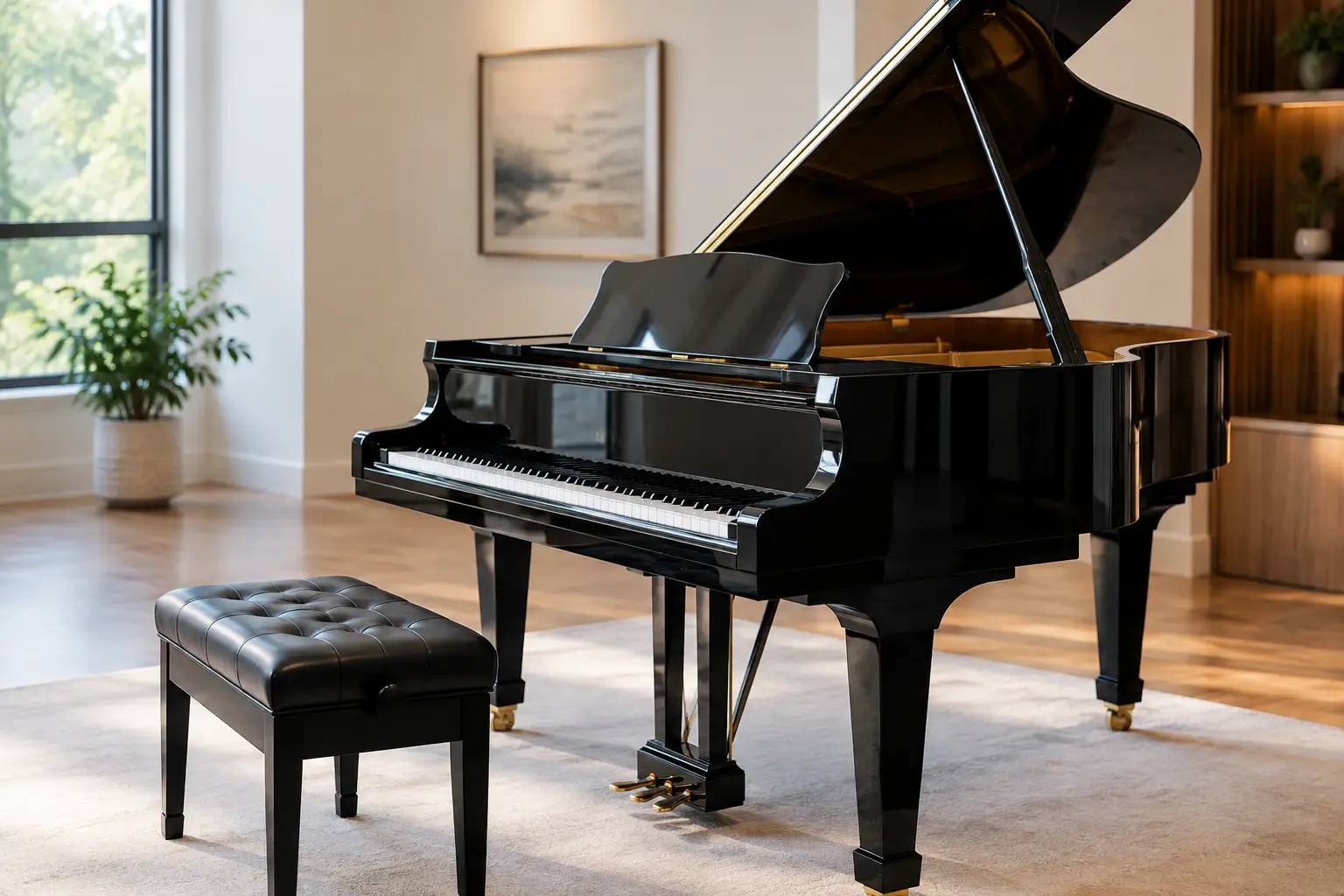
A family considering a first upright often asks a practical question before making room in the living room: do pianos depreciate? Usually, yes. Like cars, furniture, and most consumer purchases, many new pianos lose value once they enter the pre-owned market. But a piano is not a simple commodity. Its brand, build quality, condition, service history, and musical character can change the answer dramatically.
A well-chosen piano can provide decades of meaningful use, and certain premium instruments may hold their value remarkably well. The goal is not to treat every piano as a financial investment. It is to buy an instrument whose quality, condition, and long-term ownership costs make sense for your home, studio, or musical goals.
Do Pianos Depreciate After Purchase?
Most new pianos depreciate most noticeably during their first years of ownership. A buyer shopping for a new entry-level or mid-range piano pays for a factory-fresh instrument, dealer preparation, warranty coverage, and the confidence of known history. When that piano is resold, the next buyer naturally expects a lower price.
The rate varies. A reputable Japanese or European piano that has been properly maintained may retain a strong portion of its value compared with a lesser-known brand of similar age. A piano that was neglected in a humid basement, moved improperly, or allowed to go decades without service can lose far more value than its age alone would suggest.
Digital pianos generally depreciate faster than acoustic pianos. Their electronics, features, and sound technology age more like other consumer electronics. An acoustic piano, by contrast, is a complex mechanical instrument that can often be regulated, repaired, rebuilt, and voiced over many decades.
Why Some Pianos Hold Value Better Than Others
The name on the fallboard matters, but it is not the whole story. Steinway & Sons, Yamaha, Blüthner, and other respected makers have established reputations because their instruments are consistently sought by players, teachers, institutions, and collectors. Demand supports resale value, especially when a piano is in good musical and structural condition.
A high-quality piano also begins with better materials and construction. Its soundboard, bridges, pinblock, action parts, strings, and cabinetry are designed to serve the instrument for a long life. That does not mean every premium piano automatically appreciates. It means a desirable model has a stronger market when it is time to sell or trade.
Size can influence demand as well. A 48- to 52-inch professional upright may appeal to serious students and teachers who need a capable instrument without the footprint of a grand. Compact baby grands can be popular for homes, while larger grand pianos may command greater interest from advanced players, studios, and performance spaces. Still, a larger piano is not automatically more valuable if its condition is poor or its restoration needs are extensive.
Condition Has More Impact Than Age Alone
A 40-year-old piano can be a rewarding purchase. A 10-year-old piano can be a costly mistake. The difference is often found beneath the lid and behind the music desk.
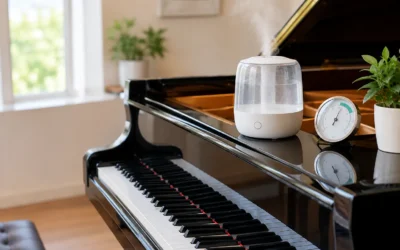
Pianos are sensitive to their environment. Seasonal humidity changes cause the wood components to expand and contract. Extreme dryness, moisture, heat, direct sunlight, and unstable room temperatures can affect tuning stability, finish condition, action performance, and structural parts. Regular tuning helps maintain pitch, but it does not correct underlying issues such as loose tuning pins, cracked soundboards, worn hammers, damaged strings, or a failing pinblock.
Before assigning a resale value, a technician or experienced piano professional should consider the piano’s tuning stability, action wear, hammer condition, string and bridge condition, soundboard health, pedal function, cabinet condition, and evidence of past repairs. These details affect whether the piano is ready to play, needs routine maintenance, or requires significant restoration.
A clean cabinet alone should never determine the price. A polished exterior can hide a tired action or serious internal concerns. On the other hand, cosmetic wear on an otherwise excellent, musically satisfying instrument may be a reasonable trade-off for a buyer focused on tone and touch.
Restoration Can Add Value, but It Must Be Done Well
Professional restoration can make an older piano more desirable, particularly when the instrument has strong original craftsmanship and musical potential. Replacing worn action components, restringing, rebuilding the keyboard, refinishing cabinetry, and carefully regulating and voicing the piano can extend its useful life.
However, restoration is not always a shortcut to profit. Major piano work is specialized and labor-intensive. The final cost can exceed what the local resale market will support, especially for an instrument from a lower-demand manufacturer. A restoration should be matched to the piano’s quality, condition, intended use, and likely market value.
Documentation matters. Records of tuning, repairs, rebuilding, humidity management, and professional moving give future buyers more confidence. If a piano has been restored, they should know what work was performed, when it was completed, and who completed it.
The Hidden Costs That Affect Piano Value
A piano’s purchase price is only part of its ownership cost. Delivery, tuning after arrival, ongoing maintenance, climate care, and occasional repairs should all be considered before comparing two instruments by sticker price alone.
Professional moving is particularly important. Pianos are heavy, mechanically intricate, and easy to damage when handled without the right equipment and training. Improper moves can cause cabinet damage, broken legs or pedals, action issues, and harm to floors or walls. Safe transportation protects both the instrument and its future value.
For many buyers, a carefully prepared used piano is a better value than a less expensive piano with an uncertain history. At A440 Pianos, this is why piano selection is approached as part of a complete ownership experience, including knowledgeable guidance, delivery, tuning, repair, and restoration support.
How to Buy With Resale Value in Mind
Buy the piano you will enjoy playing now, but make a few decisions that can protect its value later. Start with a reputable maker and a model suited to your space and playing level. A beginner who outgrows a very small, low-quality instrument quickly may spend more overall than a family who chooses a well-maintained upright with responsive touch and good tonal range.
Ask about the piano’s age, serial number, ownership history, service records, and any known repairs. If it is used, find out how it has been stored and whether it has been inspected or prepared by a qualified technician. Listen carefully to the tone across the keyboard, and play softly and loudly to assess control. Keys should return properly, pedals should function smoothly, and notes should not buzz, stick, or sound unusually weak.
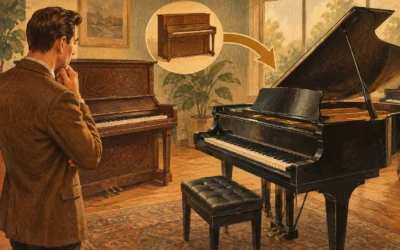
Avoid assuming that an antique piano is valuable simply because it is old. Many vintage instruments have charm and craftsmanship, but some have limited market demand or need work that outweighs their resale value. Conversely, a vintage Steinway or another respected make with excellent fundamentals may be worth preserving and restoring.
Selling a Piano: Set Expectations Around the Real Market
When selling, sentimental value and market value are often different. A piano may hold a lifetime of family memories while still facing a limited pool of buyers in a particular location. The strongest listings provide accurate details, clear photos, model and serial information, condition notes, and an honest description of recent maintenance.
Price should reflect comparable instruments, not only the original purchase price. Buyers will account for age, condition, brand reputation, moving costs, and the availability of similar pianos nearby. If an instrument needs tuning, repairs, or restoration, addressing those needs before listing may help, but only if the expected improvement in sale price justifies the work.
A quality piano should be viewed as a long-term musical asset rather than a guaranteed financial one. Choose an instrument with a voice that invites you to sit down and play, care for it consistently, and let its value be measured first in the music it brings into your home.
0 Comments