

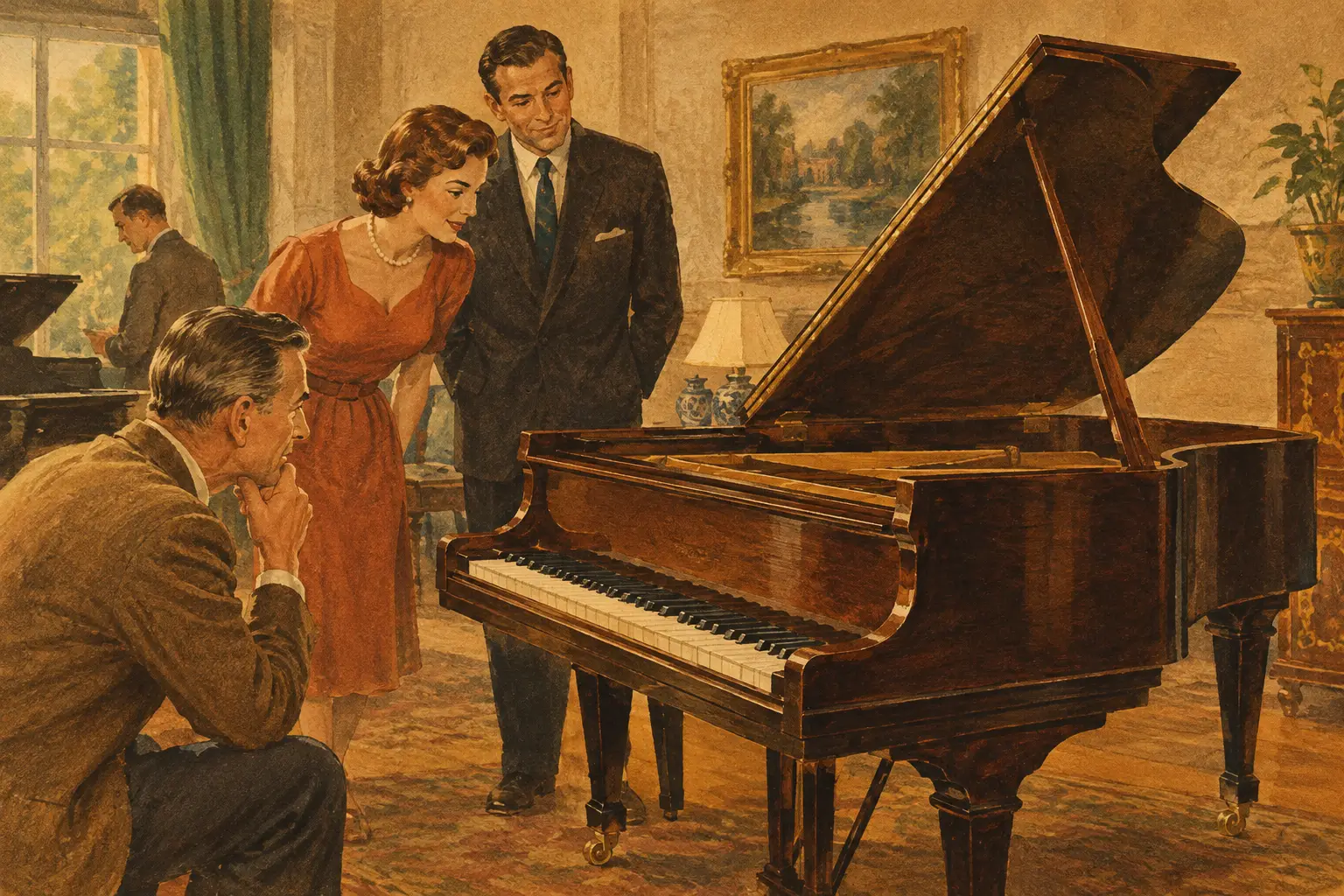
A 100-year-old grand piano can be a remarkable musical investment, a beautiful piece of furniture, or an expensive restoration project waiting to happen. The difference is rarely determined by age alone. Piano collector demand is driven by a more discerning set of factors: maker, scale, condition, history, tonal character, finish, and whether the instrument can still perform at a high level.
For collectors, serious players, designers, and families building a lasting music room, the right piano offers more than prestige. It brings craftsmanship, visual presence, and a playing experience that modern mass-market instruments do not always replicate. Buying well starts with understanding what the market actually values.
What Drives Piano Collector Demand?
Collector demand tends to gather around pianos with a clear identity. A piano may be desirable because it represents an important period in a respected maker’s history, because it was built in limited numbers, or because its cabinet design is unusually elegant. The strongest demand appears when several of these qualities meet in one instrument.
Prestigious names remain important. Steinway & Sons, Blüthner, Bösendorfer, Mason & Hamlin, Baldwin, Yamaha, and Kawai each attract different types of buyers. A vintage Steinway may appeal to a collector seeking American and European piano heritage, while a well-maintained Yamaha grand may appeal to a player who values reliability, clarity, and proven performance. Brand recognition creates a foundation, but it does not make every example equally collectible.
Size also matters. Larger grand pianos generally offer a more substantial scale design, longer strings, and greater tonal potential. A 6-foot to 7-foot grand can be especially attractive for a private music room, studio, or small performance setting. Yet exceptional smaller grands, ornate baby grands, and rare upright pianos can command attention when their design, condition, and provenance are right.
The most sought-after instruments are not simply old. They are distinctive, well-preserved or properly restored, and musically compelling.
Rarity Has Value, but It Is Not Enough
Limited production is a meaningful part of piano collector demand, especially for art-case instruments, period cabinet designs, special editions, and pianos built by makers with a strong historical reputation. An unusual finish, carved music desk, turned legs, gilt accents, or an elegant Louis XV or Art Deco cabinet can transform a piano from a musical instrument into a centerpiece.
Still, rarity without desirability has limits. An obscure piano built in small quantities may be difficult to resell if replacement parts are unavailable, the scale design is weak, or the name has little recognition among musicians. Collectors typically pay more for scarcity that is easy to understand and defend.
A rare piano is most compelling when it answers at least one of these questions clearly: Is it from an important maker? Does it represent a recognizable design period? Is the cabinet exceptional? Does it offer a sound that players actively seek? Can it be restored and serviced responsibly? When the answer is yes to several of these, the instrument has a stronger case for long-term interest.
The Appeal of Art-Case and Luxury Pianos
Art-case pianos occupy their own category. These instruments are valued as much for visual impact as for sound, making them especially appealing to collectors, luxury homeowners, hospitality spaces, and designers. Crystal grand pianos, highly polished designer instruments, and pianos with custom cabinetry can create demand that extends beyond the traditional piano market.
However, visual drama should not distract from musical fundamentals. A striking cabinet with poor action response, damaged structure, or unstable tuning will have a narrower buyer pool than an equally beautiful piano that performs well. The finest collectible pianos satisfy the eye and the ear.
Condition Determines Whether Interest Becomes Value
Condition is where many buyers make costly assumptions. An original finish, original soundboard, or original action parts may sound appealing, but originality is not always an advantage. If original components are worn beyond reliable use, professional restoration can increase the instrument’s musical and market appeal.
The key is quality and documentation. A piano that has been rebuilt with proper materials, careful regulation, accurate stringing, and a finish appropriate to its period may be far more desirable than an untouched instrument in poor condition. On the other hand, poorly executed restoration can reduce value, particularly when it alters the instrument’s character or masks serious structural concerns.
A collector should look beyond a polished exterior. The soundboard should be evaluated for its overall integrity, the pinblock for tuning stability, the bridges for separation or cracking, and the plate for damage or repair history. The action deserves equal attention. Hammers, shanks, flanges, key bushings, and dampers all influence touch, repetition, control, and future service needs.
Before committing to a premium vintage piano, ask for a clear technical assessment. A reputable specialist should be able to explain what has been restored, what remains original, what maintenance is likely ahead, and how the piano performs now. This is particularly important for instruments that will be played regularly rather than displayed as decorative pieces.
Provenance Creates Confidence and Story
Provenance means the documented history of an instrument. It can include original purchase records, serial number verification, previous ownership, restoration invoices, photographs, performance history, or evidence that the piano belonged to a notable family, institution, artist, or venue.
Not every collectible piano needs celebrity ownership. In fact, a clean history of careful private ownership can be more useful than a dramatic but unverified story. Documentation helps a buyer confirm age, model, origin, and service history. It also gives a future buyer confidence when the time comes to sell or trade.
Be cautious about broad claims such as “concert quality,” “museum piece,” or “artist owned” when they are not supported by records. The market rewards credibility. A piano with a well-documented rebuild and verifiable serial number will often inspire more confidence than one accompanied by a vague story.
Tone and Touch Still Lead the Decision
Collectors may appreciate cabinet design and heritage, but pianists ultimately respond to sound and touch. A piano’s tonal personality can make it memorable: the warm, complex voice of a mature European grand; the powerful, singing projection of an American instrument; or the clean, responsive character associated with many Japanese-built pianos.
These descriptions are only starting points. Two pianos from the same maker and era can feel very different. Voicing, regulation, room acoustics, restoration quality, and the instrument’s individual history all shape the result. Whenever possible, play the piano yourself or have a trusted pianist evaluate it.
Listen across the entire keyboard. The bass should have depth without becoming muddy, the tenor should connect smoothly through the break, and the treble should retain color without harshness. Test soft playing as carefully as loud playing. A collectible piano should offer control at low dynamics, reliable repetition, and an action that encourages musical nuance.
Buying for Collection, Performance, or Both
A buyer seeking a display instrument can place greater weight on cabinet style, rarity, and room presence. A concert-minded player should prioritize scale, action condition, tonal range, and dependable tuning stability. Most premium buyers want both, but the balance changes from one purchase to another.
This is why a 1920s art-case baby grand may be the perfect choice for a formal living room but not the best fit for an advanced pianist preparing major repertoire. Conversely, a professionally restored 7-foot grand may be an outstanding musical investment while having a simpler cabinet than a collector expects. There is no universal “best” collectible piano – there is only the right instrument for the intended use.
At A440 Pianos, a curated selection and professional technical guidance help buyers compare vintage, premium used, and specialty instruments on the factors that matter after delivery: musical performance, condition, appearance, and service requirements.
The Service Plan Is Part of the Purchase
Even an exceptional piano needs the right environment and ongoing care. Climate changes, floor placement, humidity, moving technique, and tuning intervals all affect performance and preservation. A piano that has survived decades in stable conditions can lose regulation and tuning stability quickly after an improper move or a season in an uncontrolled room.
For collectors purchasing across state lines, logistics deserve the same attention as selection. Professional piano delivery protects the cabinet, plate, action, and soundboard from avoidable risk. Once the instrument is in place, allow it to acclimate before scheduling tuning. A qualified technician can then assess regulation, pitch stability, and any adjustments needed after transport.
Regular tuning, occasional voicing, and prompt repair of small issues protect both enjoyment and value. For a fine vintage piano, deferred maintenance is rarely a savings. It usually becomes a larger restoration decision later.
A collectible piano should earn its place in your home every time the lid is opened. Choose the instrument with a story worth preserving, a voice worth hearing, and a service plan that keeps both qualities alive for the next generation.
0 Comments