


A piano can look impressive in a living room and still have very little market value. Another instrument may show a few signs of age, yet command serious attention from pianists, collectors, and buyers. That gap is exactly what makes this question worth asking: what makes a piano valuable is rarely just one thing. Value comes from a mix of musical performance, craftsmanship, condition, brand reputation, and how the instrument fits today’s market.
For buyers, families, teachers, and institutions, this matters because price and value are not the same. A higher asking price does not automatically mean a better piano, and a lower price does not always mean a smart deal. The most valuable pianos tend to offer lasting musical quality, stable construction, and a level of desirability that holds up over time.
What makes a piano valuable in the real market
A piano’s value starts with its identity, but it is confirmed by its actual condition. Brand, model, age, size, tone, action, cabinet quality, maintenance history, and restoration work all shape what a piano is worth. The market then adds another layer. A model that is highly sought after in one region or among one type of buyer may move more slowly in another setting.
That is why two pianos from the same maker can have very different values. One may have a rich, responsive tone, a strong soundboard, and a well-regulated action. The other may need major rebuilding, even if the name on the fallboard is identical. Serious buyers look past the logo and into the instrument itself.
Brand prestige and maker reputation
Some brands consistently carry stronger value because they have earned long-term trust. Names such as Steinway, Yamaha, Kawai, Blüthner, and Baldwin are recognized for craftsmanship, design quality, and broad market appeal. That recognition matters because buyers are often more confident investing in a piano with a proven reputation.
Still, brand alone does not guarantee premium value. A neglected instrument from a prestigious maker may be worth less than a well-maintained piano from a more modest brand. The reason is simple: the best pianos are valued as musical instruments first and status objects second.
Prestige does help in one important way. It tends to support resale confidence. Buyers know there is an established market for certain makers, especially in grand pianos and well-built studio uprights. For families upgrading, institutions purchasing for long-term use, or collectors seeking heritage pieces, that matters.
Why model and series matter
Within a strong brand, certain models stand out. A handmade grand from a premium series will usually have more value than an entry-level upright from the same company. Scale design, materials, action geometry, and original build quality vary widely across product lines.
This is where informed evaluation becomes essential. A buyer comparing two Yamaha pianos, for example, should not assume they belong in the same category simply because they share a brand name. Series, era, and intended use all affect value.
Condition matters more than age alone
Many people assume older means more valuable. In pianos, that is only sometimes true. Age can add character and historical appeal, but only if the instrument has been preserved properly or restored correctly. Without that, age often brings wear, instability, and costly repairs.
The structural condition of the piano is one of the biggest value drivers. The soundboard, bridges, pinblock, strings, tuning pins, action parts, and key frame all influence performance and long-term reliability. Cosmetic condition matters too, especially in premium homes, churches, studios, and showroom settings, but musical condition is the foundation.
A piano that holds tune well, responds evenly across the keyboard, and produces a clear, balanced tone will almost always be more valuable than one with visible neglect. Cracked finishes can be repaired. Deep structural issues are another matter.
Restoration can raise value – or complicate it
Restoration is not automatically positive or negative. It depends on the quality and scope of the work. A properly restored vintage piano can become highly desirable because it combines classic craftsmanship with renewed performance. Poor restoration, on the other hand, can reduce buyer confidence.
Good restoration preserves the integrity of the instrument. It respects the scale design, uses appropriate parts, and addresses both appearance and function. Cosmetic refinishing without meaningful mechanical work may improve first impressions, but it does not create true musical value.
Tone and touch are central to piano value
A valuable piano does more than look refined. It gives the player control, color, and consistency. Tone and touch are where many instruments separate themselves.
Tone includes clarity, warmth, sustain, projection, and balance from bass to treble. Some buyers prefer a bright and articulate sound. Others want depth and richness. Personal preference plays a role, but quality is still recognizable. A piano with a complex, singing tone and strong dynamic range usually holds more value than one that sounds thin, harsh, or uneven.
Touch matters just as much. The action should feel responsive and predictable, allowing the player to shape phrasing and dynamics without fighting the instrument. For students, this supports technique development. For advanced players, it is essential. A piano with a sluggish or uneven action may still be playable, but it will not command the same respect in the market.
Size, design, and intended use
In general, larger pianos tend to have greater musical potential. A grand piano usually offers longer strings, a larger soundboard, and a more sophisticated action than a smaller upright. That often translates to stronger value, especially in the premium market.
But size alone does not settle the question. A high-quality upright can be more valuable than a low-tier baby grand if it performs better and is in stronger condition. Some studio and professional uprights are excellent investments for schools, churches, and serious home use because they combine musical strength with practical footprint.
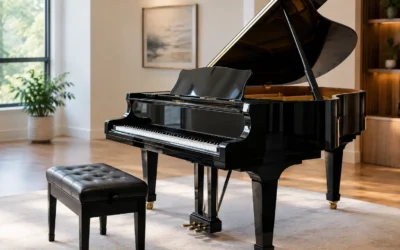
Design and finish also affect value. Ebony polish remains a classic standard, but rare finishes, exotic veneers, and distinctive cabinetry can increase appeal when they align with buyer taste. Specialty instruments, including luxury or visually dramatic grands, may command premium pricing when presentation is part of the purchase decision.
Provenance, maintenance, and documentation
A piano with a clear history is easier to value and easier to trust. Buyers want to know where the instrument has been, how it has been used, and whether it has received regular care. Maintenance records, service receipts, and restoration details can all support value.
This is especially important in used and vintage pianos. An instrument that has been tuned regularly, stored in a stable environment, and serviced by qualified technicians will usually present fewer risks than one with an unknown background. That confidence can make a meaningful difference in price.
For premium buyers, provenance can add another layer. A piano with notable ownership, historical significance, or collector appeal may carry value beyond its core musical attributes. That said, provenance works best when the instrument is also musically worthy. History alone does not compensate for poor condition.
What makes a piano valuable to different buyers
Value is not identical for every customer. A family buying a first acoustic piano may care most about reliability, tone, and budget. A conservatory-level player may focus on action refinement and tonal depth. A church may prioritize projection and durability. A collector may place more weight on rarity, maker, and historical significance.
This is where the phrase what makes a piano valuable needs some context. The answer changes slightly depending on the buyer’s goal. The best purchase is not always the most expensive instrument. It is the one with the strongest combination of musical quality, condition, and fit for its purpose.
That is also why expert guidance matters in the premium used market. A piano should be evaluated as both an instrument and an investment. At A440 Pianos, that standard is central to how serious buyers compare inventory, restoration quality, and long-term ownership value.
Market demand and resale strength
The market ultimately confirms value. Demand rises for pianos that combine recognizable branding, excellent condition, strong performance, and broad buyer appeal. Grand pianos from respected makers often lead this category, but exceptional uprights can also perform well.
Resale strength depends on realism. Buyers are more informed than ever, and they compare pianos carefully. An instrument priced in line with its condition, service history, and brand position will attract stronger attention than one priced only on sentiment. Emotional attachment is understandable, especially with family pianos, but the market responds to tangible qualities.
A valuable piano is one that earns confidence when the lid is opened and the keys are played. It has substance behind the finish, quality behind the name, and performance that justifies the investment. If you are weighing a piano’s worth, start with how it sounds, how it feels, how it was built, and how well it has been cared for. The right instrument will make its case in every note.
0 Comments