

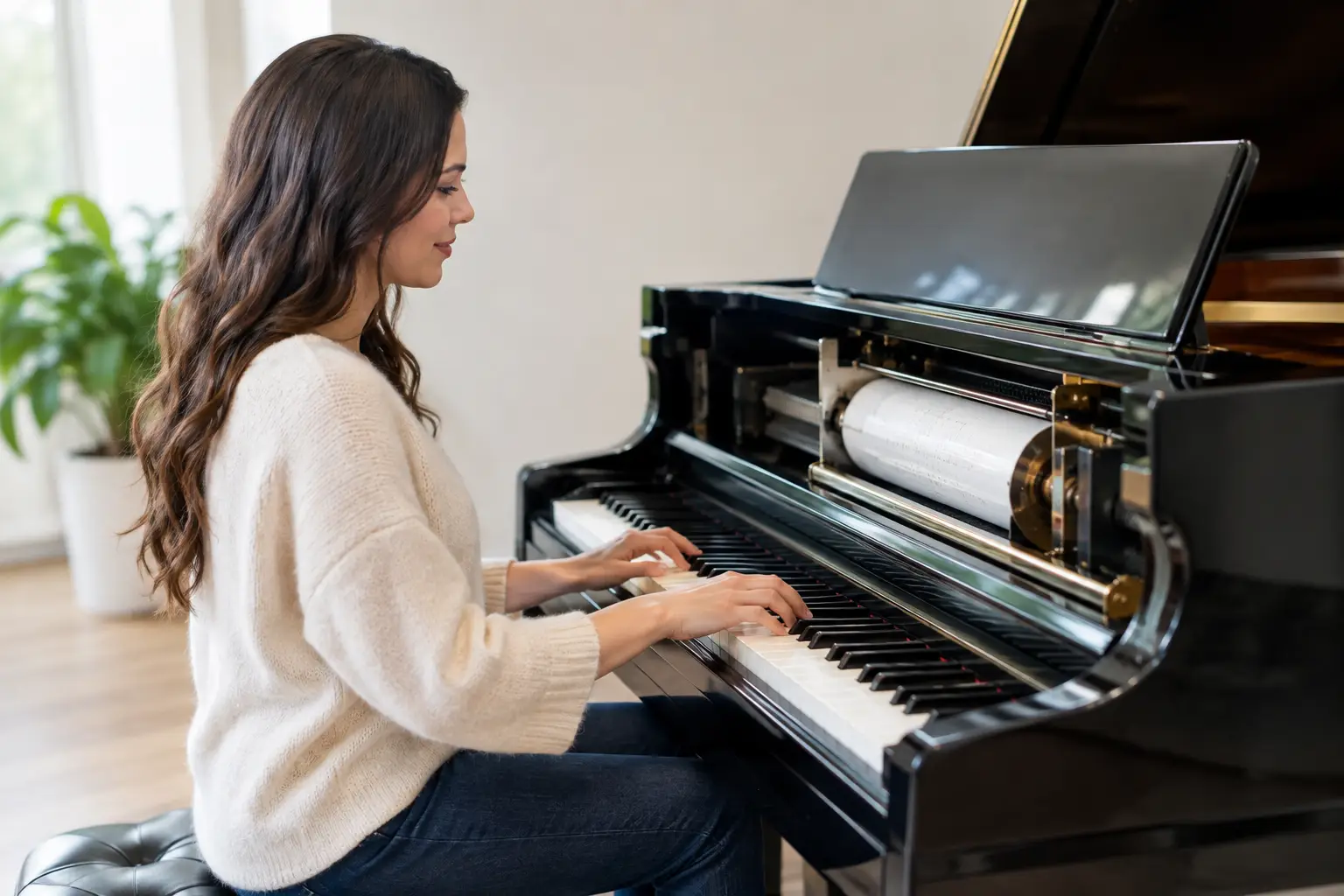
A player piano should feel like a real musical instrument first and an impressive technology purchase second. The best player piano features bring extraordinary performances into your home while preserving the touch, tone, and visual presence that made you want a piano in the first place. For a family room, teaching studio, formal living space, or collector’s home, the right system depends as much on the piano beneath it as the technology inside it.
A well-chosen self-playing piano can play softly during dinner, fill a room for a special gathering, support a student’s practice, and introduce you to performances you may never hear live. The details matter, though. Not every player system delivers the same musical experience, control, recording quality, or long-term ownership value.
Start With the Piano, Not the Player System
The first feature to evaluate is the acoustic piano itself. A sophisticated player system cannot make a poorly maintained instrument sound rich, responsive, or stable. Whether you are considering a new grand, a restored vintage instrument, or a quality upright, listen for an even scale, a pleasing tonal character, responsive action, and a soundboard and structure in good condition.
This is especially important with used player pianos and retrofit installations. A piano may have a recognizable name or a beautiful cabinet but still need regulation, tuning work, action repair, or restoration. A thorough inspection helps clarify whether you are buying a piano that will offer years of enjoyment or one that needs significant attention before the player system can perform at its best.
For many buyers, a grand piano offers the most compelling self-playing experience because of its dynamic range, bass response, and visual impact. A quality upright can be a smart choice when space, budget, or room layout calls for a more compact footprint. The right choice is the one that suits the room and the way you intend to enjoy it.
Best Player Piano Features for an Authentic Performance
Real key and pedal movement
The most captivating player pianos visibly move their keys and pedals as they perform. This is more than a visual effect. A true reproducing system uses the piano’s action to create the music, allowing guests to see the performance unfold in front of them.
Look closely at how naturally the keys respond at different volumes. Delicate passages should appear controlled rather than mechanical, while stronger passages should have energy without excessive noise or harshness. Pedal operation matters, too. Sustain and soft-pedal effects are central to expressive piano playing, particularly in classical repertoire and jazz.
Some systems offer more detailed control over subtle touch variations than others. If you are purchasing a premium instrument, this level of expression is worth hearing in person before making a decision.
High-resolution performance playback
A player piano is only as expressive as the performance data it can reproduce. Basic systems can play notes accurately, but more advanced systems capture fine details such as timing, dynamics, pedal depth, and phrasing. Those details separate a correct rendition of a song from a performance that feels alive.
Ask to hear contrasting pieces rather than just one dramatic demonstration. A lively show tune can make nearly any system sound exciting. A slow Chopin nocturne, a delicate Debussy piece, or an intimate jazz ballad reveals whether the system handles quiet dynamics and sustained phrases with real sensitivity.
The best systems also use professionally recorded performances by accomplished artists. For listeners who want a concert-like experience at home, the caliber and variety of the artist library can be as important as the hardware itself.
A music library you will actually use
A large song count is appealing, but the right library is better than the biggest library. Consider the music your household enjoys: classical masterworks, jazz standards, Broadway, pop, holiday music, Latin music, or instrumental arrangements for entertaining.
Pay attention to whether the library includes full performances, shorter background arrangements, playlists, and seasonal selections. A home that hosts often may value curated sets that can run comfortably during a dinner party. A serious music lover may prefer access to complete works and respected concert artists.
It is also worth asking how new music is acquired. Some platforms rely on subscriptions, while others allow individual purchases or offer a combination of both. Neither approach is automatically better. The practical question is whether the ongoing cost and selection fit your listening habits.
Simple controls and useful app access
Modern player systems often use a tablet, smartphone app, dedicated touchscreen, or a combination of controls. A good interface should make it easy to select music, adjust volume, create favorites, and start a playlist without requiring a technical manual every time someone visits.
App control is particularly useful when the piano is across the room or placed in a larger entertaining area. It can also make it easier to filter music by genre, composer, mood, or artist. Still, buyers should not choose a system on app design alone. Technology changes faster than pianos do, so ask about software updates, support, and the availability of basic controls on the instrument itself.
For homes with younger children or frequent guests, parental settings and simple volume limits can be welcome features. The best system is one everyone in the household can enjoy confidently.
Adjustable volume and audio options
An acoustic player piano produces sound through its strings and soundboard, which is a major part of its appeal. Yet there are times when reduced volume is helpful. Many systems allow you to adjust playback intensity, while some instruments combine player technology with silent or digital features for headphone listening.
These capabilities deserve careful explanation because they are not all the same. Reducing playback volume is different from a true silent-piano mode, where the acoustic action is disengaged and sound is heard through headphones. A built-in speaker system is also different from the natural acoustic sound of the piano itself.
If quiet practice is a priority, ask specifically about headphone capability, sampled piano sound quality, and whether a student can practice privately without disturbing others. If entertaining is the priority, hear how the acoustic piano fills your particular type of room.
Recording and educational tools
Some player pianos can record your own playing and reproduce it through the acoustic action. This can be meaningful for teachers who want to demonstrate a lesson, composers developing ideas, pianists reviewing their interpretation, or families preserving a special performance.
Recording quality and transfer options vary widely. A serious pianist may want detailed capture of dynamics and pedaling, while a casual player may simply value the ability to save a favorite family rendition. If this feature matters, request a live demonstration and ask how recordings are stored, named, backed up, and played back.
Educational features, such as interactive lessons or visual learning tools, can be helpful for beginners. They should support regular instruction and practice rather than replace a skilled teacher and a properly maintained piano.
Installation, Service, and Room Fit Matter More Than Buyers Expect
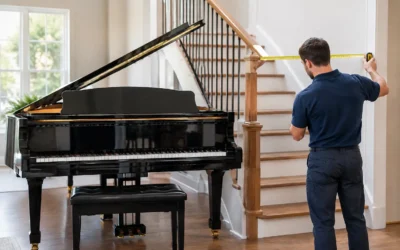
A player piano contains acoustic, mechanical, and electronic components. That makes professional delivery and setup essential. Grand pianos require careful route planning, proper equipment, and experienced handling to protect both the instrument and the home. Once placed, the piano needs time to acclimate before final tuning.
Your room affects the experience as well. High ceilings, hard floors, large windows, and open layouts can make a piano sound brighter or more powerful. Rugs, upholstered furniture, and curtains can soften the sound. Positioning the instrument away from direct sun, exterior doors, heating vents, and dramatic humidity changes helps protect its finish, tuning stability, and internal components.
Before buying, measure more than the piano’s footprint. Account for bench clearance, lid opening on a grand, walking paths, doorways, staircases, and the route from delivery truck to room. A beautiful instrument should feel at home in the space, not squeezed into it.
Questions to Ask Before You Choose
A strong demonstration should answer practical ownership questions, not just showcase a favorite song. Ask whether the keys and pedals move, how music is purchased or accessed, whether subscriptions are required, and what happens if you change phones or home Wi-Fi. Ask who provides technical support if the player system needs service.
For a used or vintage piano with a player system, ask when the piano was last tuned and regulated, whether the system was installed at the factory or added later, and what restoration work has been completed. Request clarity about the condition of the action, pinblock, soundboard, strings, hammers, and electronics.
It is also reasonable to ask about future service. Acoustic pianos need regular tuning and occasional maintenance regardless of player technology. Choosing a piano specialist who can coordinate delivery, tuning, repair, and ongoing care makes ownership much more comfortable.
At A440 Pianos, we encourage buyers to spend time with the instrument, hear several musical styles, and consider the full ownership experience. The best player piano is not simply the one with the longest feature list. It is the piano that sounds beautiful in your home, fits the way you live, and gives you a reason to sit down and enjoy music more often.

0 Comments