

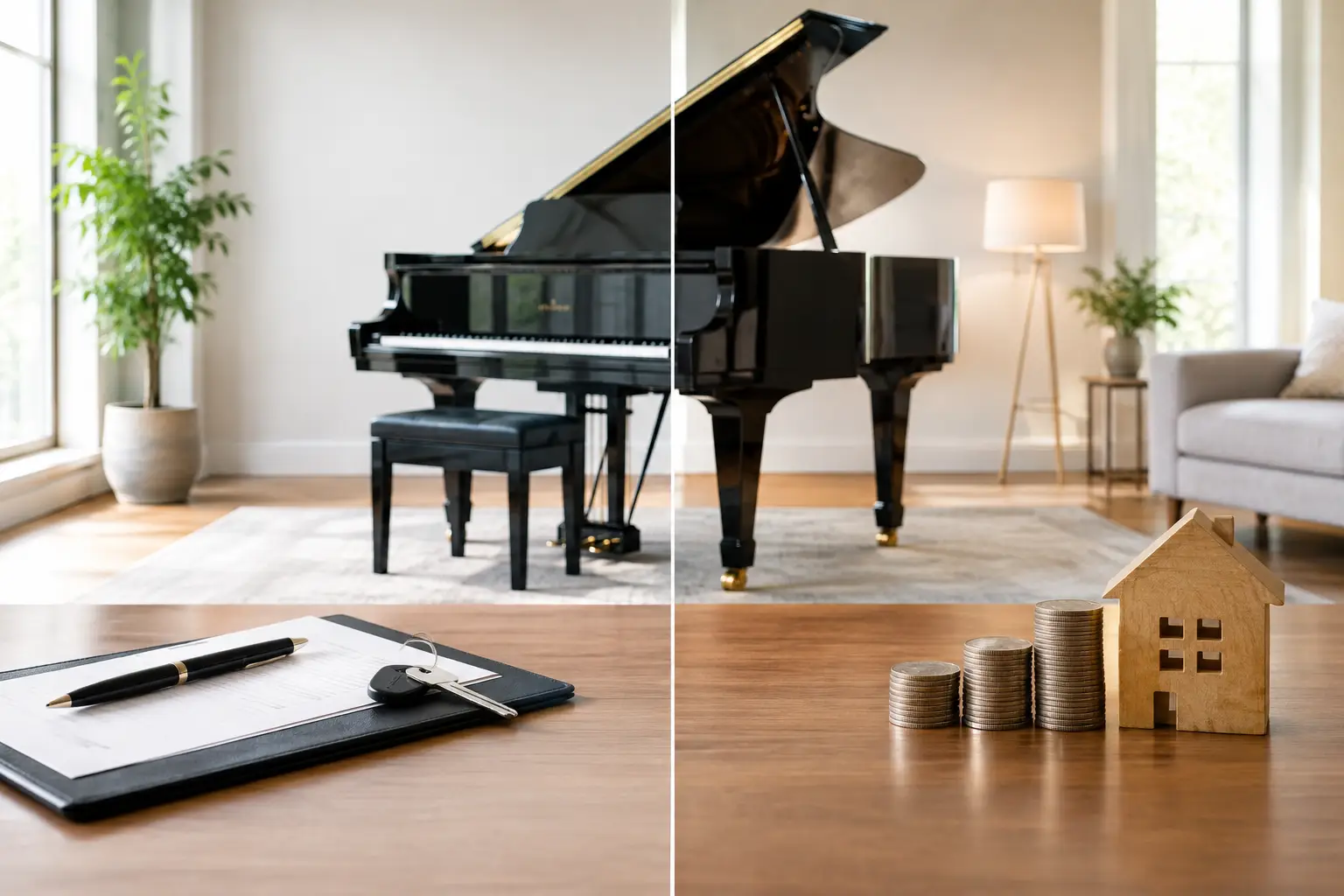
A piano can become the center of a home: the place where a child learns their first scale, a returning adult reconnects with music, or a serious player shapes daily practice. That makes the payment decision more personal than it may seem. When weighing piano lease versus financing, the better choice depends on how certain you are about the instrument, your budget, and whether you want ownership from the start.
Both options can make a quality piano more attainable. They are not interchangeable, however. A lease often emphasizes flexibility and a lower initial commitment, while financing is designed for buyers who are ready to invest in an instrument they intend to keep. Understanding the difference before you select a piano helps you focus on the music rather than second-guessing the paperwork.
Piano Lease Versus Financing: The Core Difference
With financing, you purchase the piano and repay the amount borrowed over a defined term. The piano is yours, subject to the lender’s agreement, and your payments build toward full ownership. This route is common for families purchasing a first acoustic piano, educators equipping a studio, and musicians choosing a long-term instrument such as a Yamaha upright, a restored vintage grand, or a Steinway.
A piano lease allows you to use an instrument for a set period while making recurring payments. At the end of that term, the agreement may give you choices such as returning the piano, renewing the lease, upgrading to another model, or purchasing the instrument. Exact terms vary substantially by provider. Some programs are traditional rentals, while others are lease-to-own arrangements, so the written agreement matters more than the label alone.
The question is not simply, “Which monthly payment is lower?” It is, “What do I need this piano to do for me over the next several years?”
When Leasing a Piano Can Make Sense
Leasing can be a sensible path when your needs are still taking shape. Perhaps your child has just begun lessons and you want an acoustic instrument without committing immediately to a particular size or model. Maybe you are relocating, furnishing a temporary residence, or testing whether a self-playing piano fits your entertaining style. In those cases, flexibility may have real value.
A lease can also help when you expect your requirements to change soon. A beginner may start with a compact upright but progress quickly enough to need the wider tonal range and action of a professional upright or grand. The ability to return or upgrade, if included in the agreement, can reduce the pressure of making a permanent decision early.
Still, a lease should be evaluated beyond its monthly cost. Ask whether delivery, tuning, maintenance, insurance, pickup, damage responsibility, and return transportation are included. A piano is not a piece of flat-pack furniture. Moving it properly requires specialized equipment, trained crews, and planning for stairs, tight turns, flooring, and climate. A low lease payment can look different once those responsibilities are clarified.
Lease questions worth asking before you sign
Read the agreement with the same care you would bring to inspecting the piano itself. Confirm the length of the lease, the total of all scheduled payments, and what happens if you want to end the agreement early. Find out whether payments apply toward a future purchase and whether there is a stated purchase option at the end.
Also ask about the condition standard for returns. Normal use should be defined separately from damage. If the instrument is acoustic, determine who is responsible for regular tuning and for service needs caused by humidity, moving, or everyday use. Clear answers protect both your budget and your experience with the piano.
When Financing Is the Better Long-Term Value
Financing generally suits buyers who have found the right piano and expect to enjoy it for many years. You may be choosing an instrument with a sound and touch that inspires you, one that fits the room beautifully, and one that offers room for musical growth. In that situation, ownership can make more sense than paying for temporary use.
The most meaningful advantage is straightforward: each payment is directed toward owning the piano. Once the financing obligation is complete, you have an asset that can continue to serve your household, studio, congregation, or performance space. Well-maintained acoustic pianos from respected makers can provide decades of musical life. Their resale value will vary with brand, age, condition, restoration quality, and market demand, but a carefully chosen piano is not disposable.
Financing also gives you more freedom to make the instrument part of your home. You can schedule regular tuning, address a developing regulation issue, add a humidity-control system if appropriate, and make thoughtful decisions about its long-term care. These are ordinary parts of acoustic piano ownership, not inconveniences. Proper maintenance preserves tone, touch, and reliability.
For a buyer considering a premium upright or grand, financing may also allow a more suitable purchase now rather than settling for a piano that will be outgrown quickly. The right instrument is not necessarily the largest or most expensive one. It is the piano whose condition, scale, action, tone, and footprint match the player and the space.
Look at the total financing cost, not only the payment
A manageable monthly payment is useful, but it does not tell the whole story. Review the annual percentage rate, term length, down payment, fees, payment due date, and any prepayment rules. A longer term may lower the monthly obligation while increasing the total amount paid over time.
Consider the complete ownership budget as well. In addition to the purchase payment, an acoustic piano needs a stable environment, periodic tuning, and professional service when needed. Delivery should be handled by piano movers who understand how to protect the instrument, your home, and everyone involved. These costs are part of owning a quality piano responsibly.
How Your Piano Choice Changes the Decision
The type of piano can point you toward one option or the other. A beginner shopping for a first piano may value the flexibility of leasing if lessons are brand new and space is uncertain. Yet many families find that financing a well-prepared used or vintage upright delivers stronger long-term value than repeatedly paying for a short-term instrument.
For a serious pianist, teacher, or collector, financing is often the more natural fit. A professional upright such as a Yamaha U3, a carefully restored vintage instrument, or a grand piano chosen for a particular tonal character is usually a deliberate, lasting purchase. These buyers tend to benefit from working with a specialist who can evaluate condition, explain restoration work, and help compare instruments in person.
Digital and electric pianos create a slightly different calculation. They can be excellent choices for apartments, headphone practice, recording, or a household that needs compact dimensions. Because technology changes more quickly than acoustic piano design, flexibility may matter more for some digital-piano buyers. Even so, the same rule applies: compare total cost, expected years of use, and the value of eventually owning the instrument.
A Practical Way to Decide
Start with your time horizon. If you expect to use the piano for only a year or two, or you are genuinely unsure about the player’s commitment, a lease with fair return and upgrade terms may be appropriate. If you can picture the piano remaining in your home or studio for five, ten, or twenty years, financing is usually worth closer consideration.
Next, be honest about the instrument you need now. A child does not need a concert grand to begin learning, but they do benefit from a piano with a responsive action, dependable tuning stability, and a musical sound. Likewise, a serious adult returning to piano may be more motivated by a quality upright than by a temporary compromise.
Finally, compare agreements side by side using the total amount you will pay, not just the monthly number. Include delivery, tuning, service obligations, taxes, insurance requirements, and end-of-term choices. If a term is unclear, ask for an explanation in plain language before moving forward.
At A440 Pianos, the goal is to help each customer choose an instrument and payment path that supports real musical life. The best decision is the one that puts a dependable, inspiring piano within reach while leaving you comfortable with what comes next.

0 Comments